About Advanced Land Observing Satellite-2 "DAICHI-2" (ALOS-2)
|
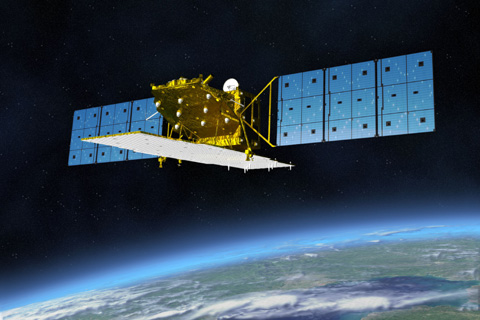
The Earth needs a health checkThe Advanced Land Observing Satellite-2 (ALOS-2) is follow-on mission from the "DAICHI", which contributed to cartography, regional observation, disaster monitoring, and resource surveys. ALOS-2 will succeed this mission with enhanced capabilities. |
|---|
Project Topics
indexJAXA Concludes Modification to the Agreement with the Vietnam National Space Center (VNSC) on Satellite Data Exchange
|
JAXA has concluded a “Modification to the Agreement between the Vietnam National Space Center (VNSC), Vietnam Academy of Science and Technology, and JAXA on the Exchange of Satellite Data”. The agreement was formally exchanged in the presence of Ms. Sanae Takaichi, Prime Minister of Japan, who was visiting Viet Nam for the Japan–Viet Nam Summit Meeting, and H.E. Mr. Le Minh Hung, Prime Minister of Viet Nam. The exchange was conducted by Mr. Yasuo Ishii, Senior Vice... |
Press Release
indexCharacteristics of Advanced Land Observing Satellite-2 "DAICHI-2" (ALOS-2)
1) Disaster monitoring of damage areas, both in cosiderable detail, and when these areas may be large
2) Continuous updating of data archives related to national land and infrastructure information
3) Effective monitoring of cultivated areas
4) Global monitoring of tropical rain forests to identify carbon sinks.
The state-of-the-art L-band Synthetic Aperture Radar-2 (PALSAR-2) aboard ALOS-2, which is an active microwave radar using the 1.2GHz frequency range, will, in responding to society's needs, have enhanced performance compared to DAICHI/PALSAR. The PALSAR-2 is capable of observing day and night, and in all weather conditions.
Precise diagnosis of the earth using "L-band SAR" Japanese advanced technology
ALOS-2 will have a spotlight mode (1 to 3m) and a high resolution mode (3 to 10m), whilst PALSAR has a 10m resolution. It will allow comprehensive monitoring of disasters by providing users with more detailed data than DAICHI/PALSAR.
The observation frequency of ALOS-2 will be improved by greatly expanding the observable range of the satellite up to about 3 times, througe an improvement in obserble areas (from 870km to 2,320km), as well as giving ALOS-2 a right-and-left looking function, currently not available on DAICHI/PALSAR.
Mission talk by team leaders
 |
Project Manager Shinichi SuzukiHere are messages from Project Managers. |
|---|