Asteroid explorer Hayabusa2 achieves world-first laser ranging
during asteroid flyby
July 30, 2026 (JST)
Japan Aerospace Exploration Agency
National Institute of Technology, Oshima College
Kyoto Sangyo University
National Astronomical Observatory of Japan
Chiba Institute of Technology
Hokkaido University
On Sunday 5 July 2026, the Japan Aerospace Exploration Agency (JAXA) achieved the world’s first successful laser ranging during an asteroid flyby using the LIDAR laser altimeter onboard the asteroid explorer Hayabusa2 during the flyby exploration of asteroid Torifune, the first exploration target of the Hayabusa2 Extended Mission.
Laser ranging is a technology that measures the distance to a target with high precision by sending laser pulses at a target and measuring the time taken for the pulses to reflect of the target surface and return. The Hayabusa2 LIDAR has already achieved significant results in acquiring data on the surface topology of asteroid Ryugu, and additionally played an important role in spacecraft navigation. However, the laser ranging conducting during the flyby of asteroid Torifune was a different kind of challenge. For the ranging to be successful, the laser had to be directed from the fast-moving spacecraft onto a small target (asteroid Torifune) similar to traditional Yabusame Japanese horseback archery, where it is necessary to control the horse, your posture, and release the arrow without missing the split-second moment when the target is in sight. Accurately controlling the spacecraft’s trajectory and attitude, as well as configuring the instruments to ensure that noise would not be falsely detected as a reflected signal were essential to success during this difficult laser ranging operation. The advanced preparations and activities on the actual day by the team, undertaken with determination not to miss this unique opportunity, produced this amazing success and ranging was successfully conducted twice, at 18:29 and 56.5 seconds and 57.5 seconds (approximately 4 seconds and 3 seconds before the closest approach to Torifune), from distances of about 20km and 15km respectively.
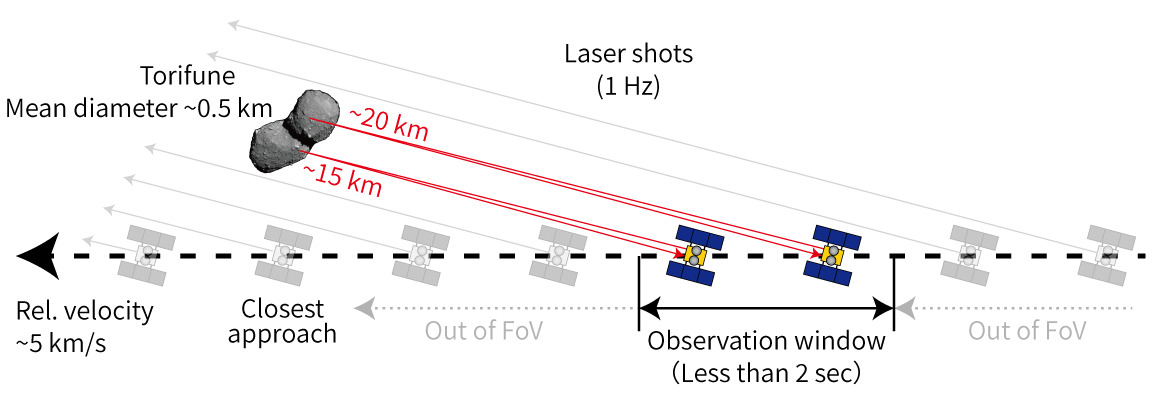
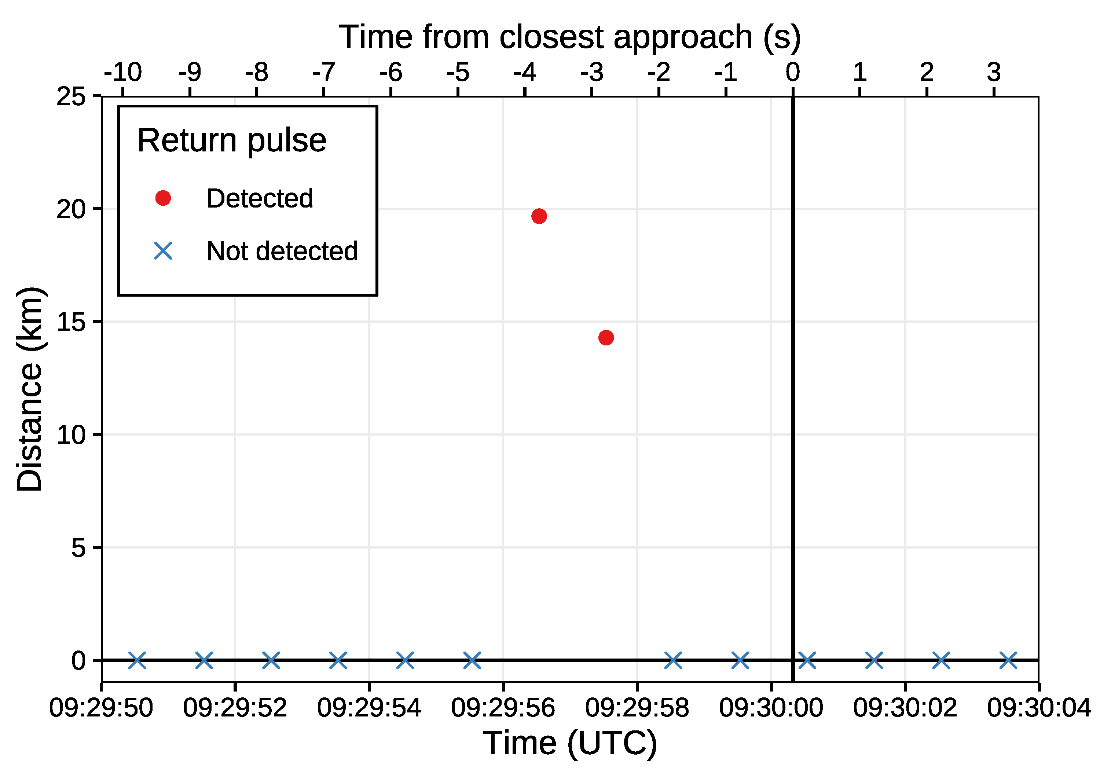
The laser is focused into an extremely narrow beam, and hits only a very small portion of Torifune’s surface. Specifically, when the distance was 20km, the illuminated area is limited to a region of approximately 30m in diameter (23m at 15km). The team is currently conducting a detailed analysis to determine exactly where the laser touched the surface of Torifune.
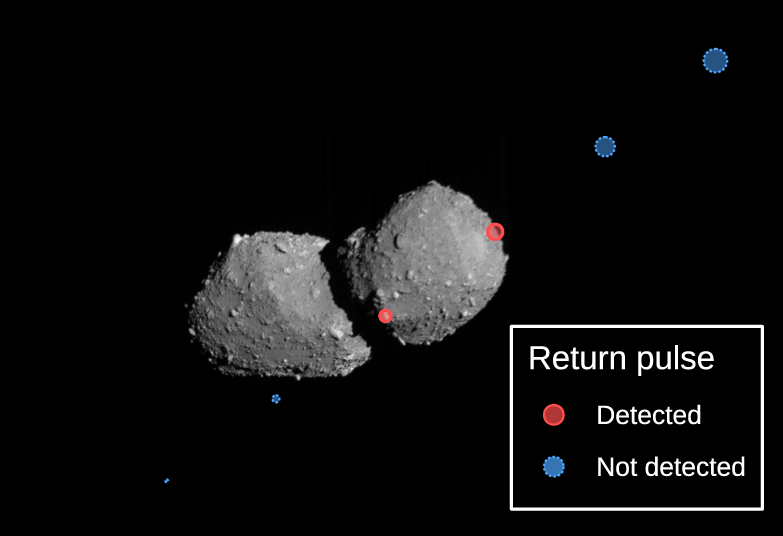
Because there is no atmosphere in outer space, distant objects do not appear hazy but there is also nothing for comparison. This makes it difficult to distinguish between a large celestial body that is far away and a smaller body that is nearby based on the image data (photographs) alone. Laser ranging makes it possible to add scale to the photographs, and allow an accurate determination of the size of the celestial body. Moreover, if the ranging data can be obtained at multiple points in time, this can be combined with the spacecraft tracking data to determine both position and velocity of the celestial body with high accuracy, thereby improving the accuracy of orbital predictions. Such information about asteroids is particularly important not only for planetary exploration, but also for planetary defence—namely understanding and responding to impacts of celestial bodies on Earth.
Observations using lasers are characterised by the ability to obtain data regardless of sunlight conditions, even from locations that would appear shadowed and invisible in photographs. In the future, if higher-performance laser ranging equipment is used, it is expected that even when a flyby trajectory must be adopted with poor illumination conditions, the spacecraft can be guided accurately and information such as the size, shape, and motion of the celestial body can be successfully obtained. The success of this ranging operation constitutes an important technological demonstration result that will advance JAXA’s deep-space exploration capabilities, and has marked a major milestone.
* Credit for figures 1, 2, and 3: JAXA, Hokkaido University, Oshima National College of Maritime Technology, Chiba Institute of Technology, NAOJ, SOKENDAI, Kyoto Sangyo University.
Reference: Scientific instruments onboard Hayabusa2
| Abbreviation | Name | Purpose | Specification | Exterior |
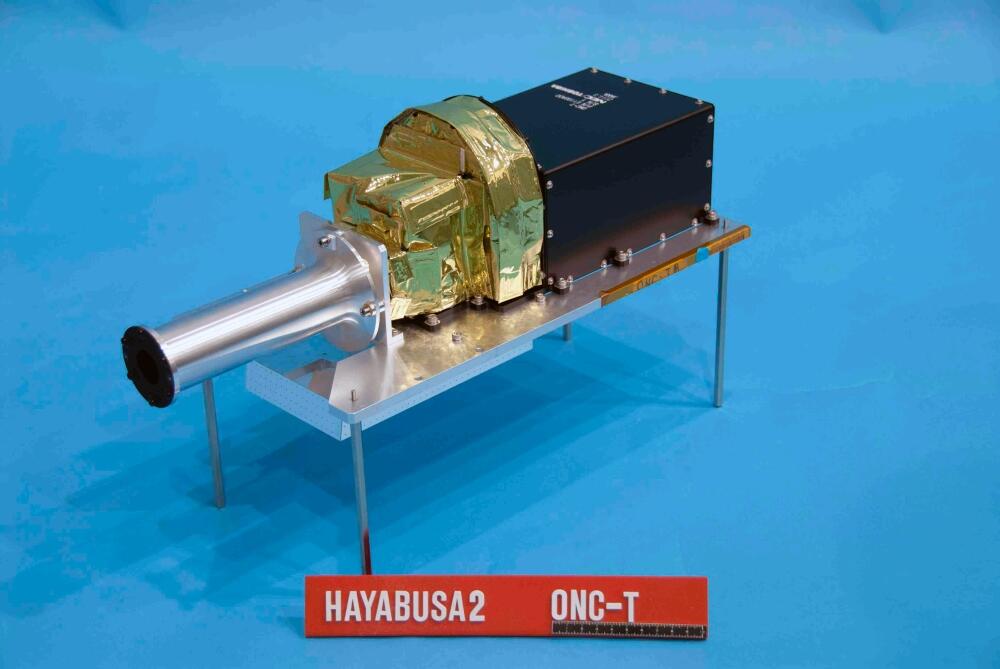
| ONC-T | Optical Navigation Camera - Telescopic | Capturing astronomical photographs. Acquiring navigation and scientific data. |
・FoV 6.35°× 6.35° ・Pixel count 1024×1024 |
 |
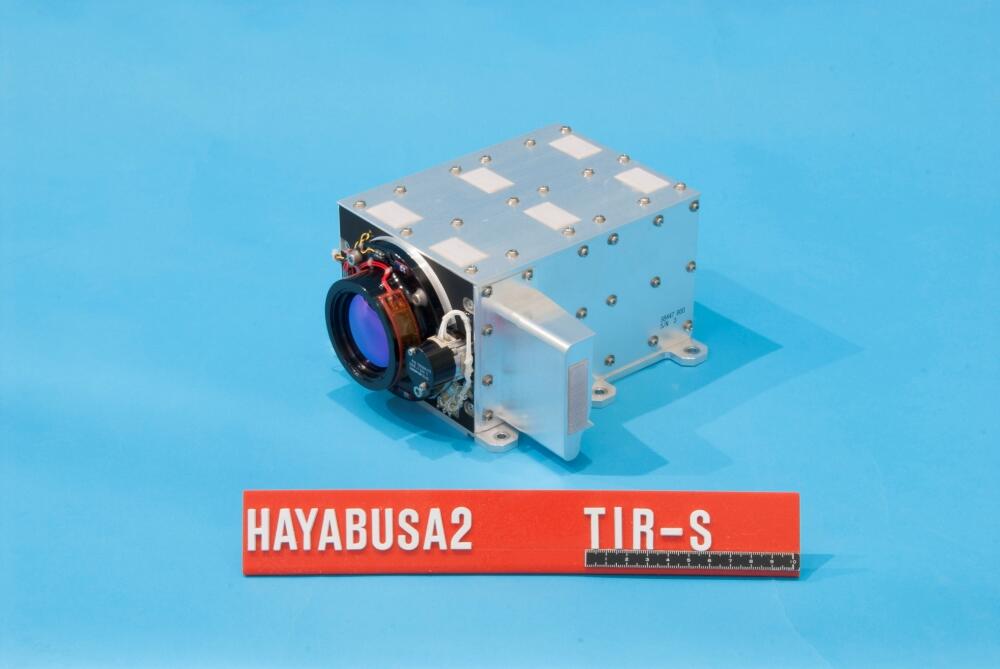
| TIR | Thermal InfraRed Imager | Measurement of the asteroid surface temperature, thermal inertia, surface roughness. | ・FoV 16°×12° ・Observation wavelength 8〜12μm ・Pixel count 328×248 |
 |
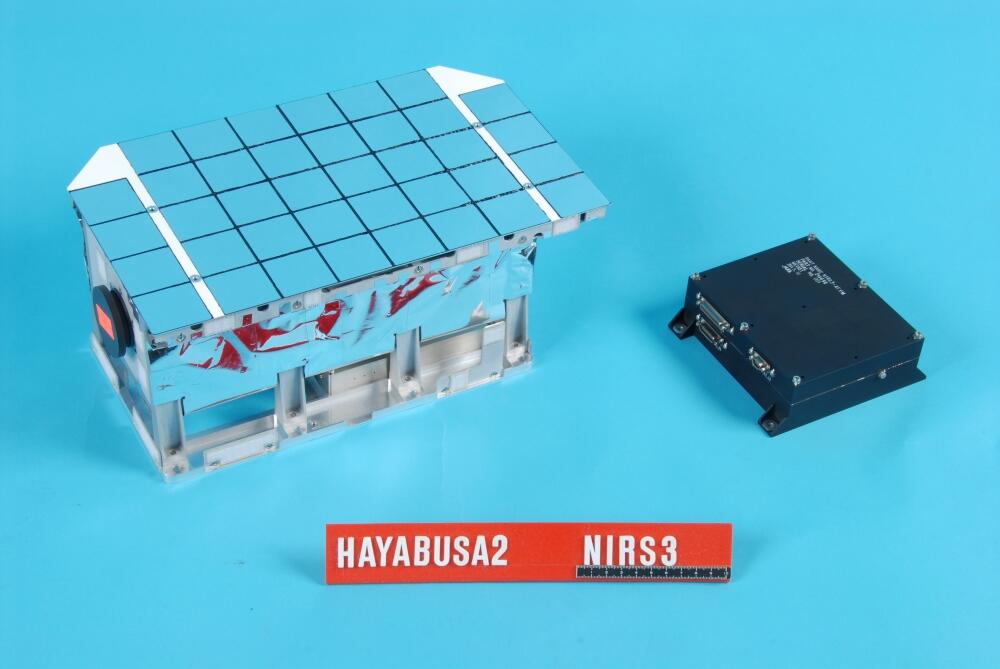
| NIRS3 | Near-Infrared Spectrometer | Investigation of composition, presence of water or hydroxyl groups (-OH). | ・FoV 0.1° ・Observation wavelength 1.8〜3.2μm ・Wavelength resolution 20nm |
 |
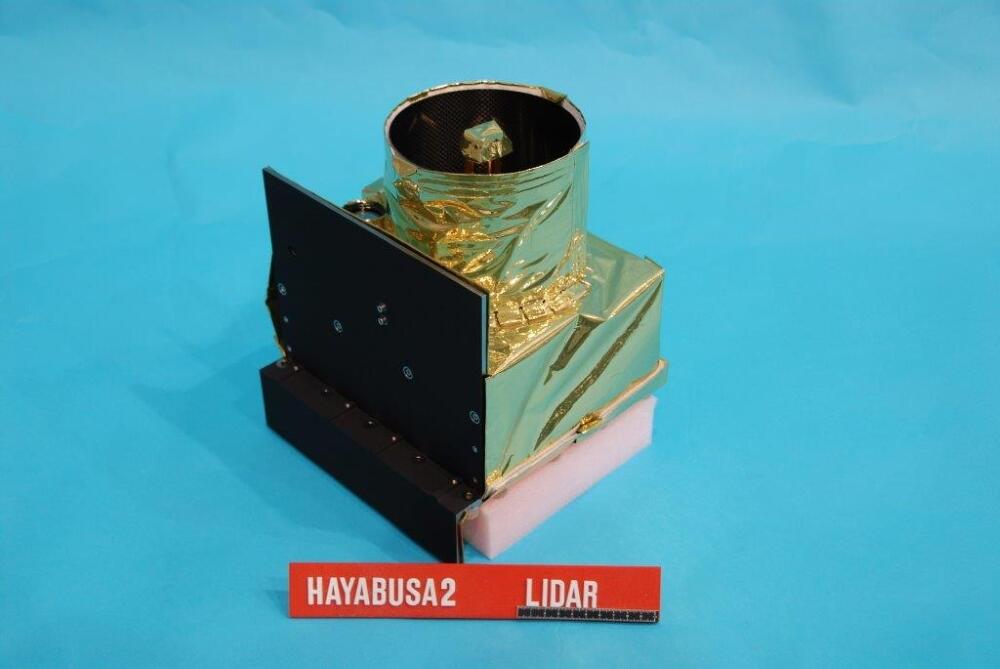
| LIDAR | Light Detection and Ranging | Measurement of the distance to the asteroid. | ・Pulse YAG laser, wavelength 1.064μm. ・Range 30m〜25km |
 |
Related Links
- Asteroid Explorer "Hayabusa2"
- Asteroid Explorer Hayabusa2 (ISAS)
- Hayabusa2 Extended Mission (Project site)
- Oshima College (Japanese Only) External Link
- Kyoto Sangyo University External Link
- National Astronomical Observatory of Japan External Link
- Chiba Institute of Technology External Link
- The University of Hokkaido External Link